Fantasy Mushroom House: A Designer's Real-World Review
When I first opened the file for Fantasy Mushroom House, my immediate reaction wasn't about stitch counts or file formats; it was about the mood. As a designer who spends hours evaluating embroidery files for client projects and my own handmade shop, I look for that spark of narrative potential. This design doesn't just sit on the fabric; it invites you into a story. It belongs firmly in the realm of Fairy Tales, evoking a whimsical, cozy atmosphere that feels perfect for nursery decor, boutique branding, or a personalized gift that stands out from generic store-bought items.
The visual personality of this piece is distinct. The layout balances delicate details with bold shapes, creating a focal point that works well without overwhelming the garment or accessory. For a creative entrepreneur looking to expand their product line, this is exactly the kind of asset that can elevate a simple tote bag or a baby onesie into a premium handmade product. However, before rushing to load this onto the hoop, we need to discuss how this design performs when it moves from the screen to the real world.
Putting Fantasy Mushroom House to the Test: A Real Project Scenario
Let's imagine a specific scenario. You are an Etsy seller preparing for the holiday season. Your goal is to create a custom embroidered sweatshirt for a boutique client who loves nature themes and wants something unique for their staff uniforms. They need a design that looks professional but retains a touch of magic. This is where Fantasy Mushroom House becomes a serious contender.
I ran a test run on a heavy cotton fleece, simulating the final sweatshirt material. The initial impression was promising. The design creates a sense of depth that translates well through thread. When stitched, the mushroom caps pop against the dark fabric, creating a high-contrast image that catches the eye immediately. In a commercial setting, this visual appeal directly impacts customer trust and perceived value. A clean, crisp execution of a whimsical theme signals professionalism, suggesting that the brand behind the product cares about quality.
The design also shines as an embroidered patch or an applique design if you decide to cut it out and attach it to denim jackets or canvas totes. The shape is organic enough to look handcrafted yet structured enough to hold its form during wear. For a small business owner, this versatility means one digital embroidery file can generate multiple revenue streams: direct apparel sales, accessories like aprons or kitchen towels, and even printable mockups for online listings.
Navigating Technical Challenges and Fabric Choices
While the aesthetic is strong, practical application requires careful consideration. Not every surface is suitable for this level of detail. If you are planning to use this as baby embroidery on soft, stretchy knits, you must be vigilant about stabilizer selection. Thin fabrics or highly textured materials can distort the intricate lines of the mushroom structure, leading to a muddy appearance that ruins the finished product.
There are specific areas where Fantasy Mushroom House demands caution. Small hoop sizes are generally risky for this design unless you are willing to crop the composition significantly. If the design includes tiny lettering or very fine decorative accents, those elements might get lost in the stitching process, especially on darker fabrics where thread contrast is critical. I strongly advise testing the design in black and white mockups first to ensure the density holds up without the distraction of color.
Furthermore, consider the end-use of the item. If you are producing commercial embroidery for items that will undergo frequent washing, such as work aprons or children's clothing, check the stitch density. High-density fill stitches can make the fabric stiff and uncomfortable if not balanced correctly with the right underlay. For products like pillow covers or tea towels, the design excels, offering a durable and visually stunning centerpiece that withstands the rigors of home use.
Key Considerations for Stitch Quality and Clarity
To ensure the best results, pay close attention to the following technical aspects:
- Stitch Density: Review the density settings in your digitizing software. Too much density can cause puckering, while too little can leave gaps in the satin stitches.
- Thread Colors: The color palette matters immensely. Ensure your chosen thread colors provide sufficient contrast against the fabric texture. A light mushroom on a pastel background might lack the impact seen on a deep navy or forest green.
- Hoop Size: Confirm that your machine's hoop size accommodates the full design. Attempting to embroider a large scene in a small hoop often leads to misalignment and wasted time.
- Stabilizer Usage: Always use a proper stabilizer appropriate for the fabric weight. For stretchy fabrics, a cut-away stabilizer is often necessary to prevent distortion over time.
From Personal Hobby to Business Asset
Whether you are a hobbyist making a personalized gift for a friend or a seasoned maker scaling up your craft business, the decision to use this design hinges on clarity and presentation. Fantasy Mushroom House offers a narrative that resonates with buyers looking for something special. It transforms a standard tote bag design or a simple sweatshirt embroidery project into a conversation starter.
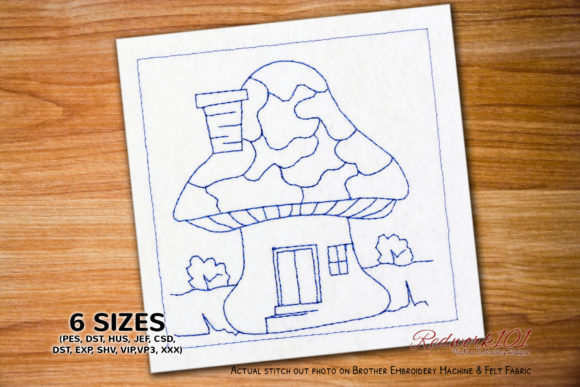
However, remember that the success of the final product relies heavily on your preparation. Before committing to a bulk run or selling the item, inspect the small details closely. Are the edges clean? Is the running stitch smooth? Does the box stitch (which appears optional in the preview) add value or clutter? The description notes that the outer box color varies, so verify if this element is essential to your vision or if it should be skipped to maintain the clean silhouette of the house.
For digital product sellers, this file serves as excellent design assets for creating mockups. Showcasing the design on various backgrounds—like a wooden table for a nursery scene or a rustic apron for a kitchen setting—helps potential customers visualize the outcome. This visualization is crucial for engagement and conversion rates on platforms like Etsy.
Final Thoughts on Professional Application
In conclusion, Fantasy Mushroom House is a versatile and charming addition to any library of machine embroidery designs. Its ability to evoke a sense of wonder makes it ideal for holiday embroidery, wedding gifts, and boutique branding. Yet, its true value lies in how you execute it. By respecting the limitations of fabric texture, managing stitch density, and choosing the right stabilizer, you can turn this digital file into a tangible masterpiece.
Always test on scrap fabric first. Check the licensing terms if you plan to sell finished items commercially. And most importantly, trust your designer instincts. If the design feels right for your brand and your clients, then Fantasy Mushroom House is ready to bring some magic to your next embroidery project.